
Spice Guides
Complete Guide to Indian Spices: Types, Uses & Flavours
Explore the world of Indian spices, including popular whole and ground spices, their flavours, culinary uses and practical tips for everyday cooking.
Vandu Spices · Published Year 2026 · 8 min read
Table of Content
What Are Indian Spices?
Indian spices are an essential part of the country’s rich culinary heritage. From turmeric and black pepper to cardamom, cinnamon and cloves, Indian spices bring flavour, aroma and colour to everyday food. Understanding the different types of Indian spices can help you choose the right ingredients for curries, rice dishes, snacks and traditional recipes.
Types of Indian Spices
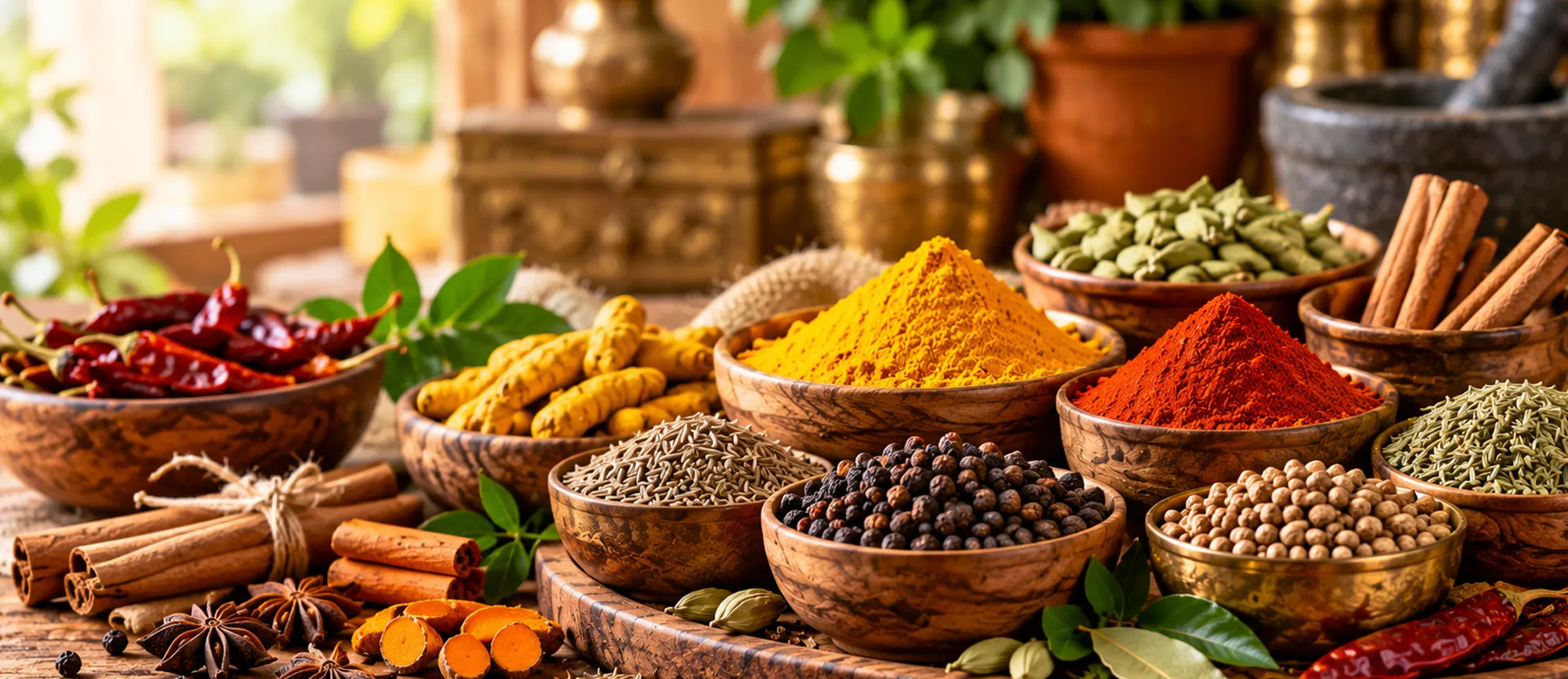
The most popular Indian spices include turmeric, cumin, coriander, black pepper, cardamom, cinnamon, cloves, fennel, chilli and mustard seeds. This Indian spice list represents some of the most commonly used ingredients in Indian cooking. Each spice has a distinctive flavour and can be used individually or combined with other spices.
Whole Spices and Ground Spices
Whole spices are commonly used for tempering, roasting and slow cooking. They can release their aroma gradually and are popular in biryani, pulao, curries and traditional Indian preparations. Ground spices are convenient for everyday cooking and can be added directly to gravies, marinades, doughs and masala blends.
Popular Indian Spices and Their Uses
Turmeric is valued for its earthy flavour and vibrant colour, while cumin adds a warm and distinctive aroma. Coriander provides a rounded flavour to many Indian dishes, and black pepper adds a sharp, warm character. Cardamom, cinnamon and cloves are often used when a recipe calls for sweet, woody or aromatic notes.
Indian Spices Used in Cooking
The way spices used in Indian cooking are added depends on the recipe. Whole spices may be tempered in oil or ghee, roasted before grinding or added during slow cooking. Ground spices are often combined with other ingredients to create curry bases and masala blends. Learning about Indian spices and their uses makes it easier to develop balanced and flavourful dishes.
How to Choose Indian Spices
When choosing spices, look for a fresh characteristic aroma, suitable appearance, good texture and appropriate packaging. Freshness is particularly important because spices gradually lose their aroma and flavour over time. Choosing quality Indian spices is an important part of creating consistently flavourful food.
How to Store Indian Spices
Store spices in clean, dry and airtight containers away from moisture, direct sunlight and excessive heat. Proper spice storage helps preserve aroma and flavour and allows you to enjoy your spice collection for longer.
Build Your Indian Spice Collection
A useful Indian spice guide does not need to be complicated. Start with versatile ingredients such as turmeric, cumin, coriander, black pepper, cardamom, cinnamon and chilli. As you explore more Indian recipes, you can gradually add regional spices and speciality blends to your pantry.
Related Articles
Spice Guides
Whole Spices vs Ground Spices: Which Is Better?
Understand the differences between whole and ground spices, including flavour, convenience, storage and the best ways to use each type.
Published Year: 2026 · 6 min read
Bring Authentic Products Home.
Get new product updates, recipes, offers and flavour inspiration from Vandu.